Showing posts with label protective behaviours. Show all posts

Monday, January 1, 2007

BITSS of New Year Resolutions: Imaginif there was a World Without Child Sexual Abuse!

Imaginif there was a world without child sexual abuse.

Imaginif 2007 was the year where you decided to provide your child with awareness and skills around what to do if someone tries to sexually abuse your child.

Imaginif “Happy New Year” meant just that for all of our children.

The BITSS model of Protective Behaviours provides you with a structure to protectively play around the important safety BITSS of:

Body Ownership
Intuition
Touch
Say no
, and
Support Networks

Matching games and activities around each of these five important protective behaviour BITSS is easy, educational and can help to keep kids safe. Just click on the links for some jam packed ideas of spreading BITSS of child safety across the globe.

Still deciding on a New Years Resolution? Make it a protective resolution. Do your BITSS to Protect your child, my child, our children.

Support 2007 Children to Have a Happy New Year. It’s easy, if you’re up for a BITT of a challenge.

Recognition of the BITSS model of Protective Behaviours from the Australian Centre for the Study of Sexual Assault:
Good Practice Programs, BITSS of Protective Play - A skill based workshop for family and child workers

Thursday, December 14, 2006

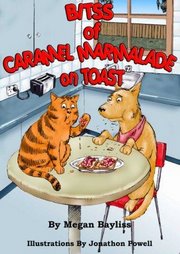
FREE Copy of the Junior Fiction Protective Behaviour Book: Bitss of Caramel Marmalade on Toast

Three FREE copies of my Children’s junior fiction chapter book on Protective Behaviours: Bitss of Caramel Marmalade on Toast.

The first three people to leave a comment on this blog over the next 24 hours will receive a copy of the book.

No matter where you live in the world, I will send you a FREE copy with FREE postage included.

Once three comments have been registered I will post my email address and you can email me your address to post you the book. Please don't put your email address in the comment field. Who wants to be spammed up by Christmas Trolls?

Addresses will be used for no other purpose than sending you a complimentary copy of Bitss of Caramel Marmalade on Toast.

What a great Christmas present to help keep kids safe.

The clock is ticking. This free offer lasts for 24 hours from time of posting this blog.

To read a related article on using Bitss of Caramel Marmalade on Toast as Bibliotherapy, Click here.

Wednesday, December 13, 2006

Protective Behaviour Decorations for Christmas

Christmas is upon us. This joyful and peaceful time can be a horror season for a child who is being accessed by a sexual predator. Close proximity, a string of holidays and higher alcohol intake can lead to many children experiencing more sexual abuse at this time of the year than at any other time.

With this in mind, I take the opportunity to reinforce Body Ownership with every child who comes through my counselling room and with my own four children.

Here are two simple and cost effective ideas you can introduce this Christmas season to reinforce the protective behaviour element of body ownership.

Paper doll chains: Instead of the usual paper strips joined to make delightful circle chains, make a paper doll chain with your child. As part of the protective learning while making the Christmas chain, show how the dolls are holding hands or touching feet but not touching any other body parts. This is because some dolls and people don’t like being touched and we must respect that. Sometimes we don’t like being touched and we can use our words to tell, but dolls don’t have words so they have to tell us by allowing touching hands only.

Gingerbread person: Using a gingerbread person cutter you can show your child the out line of the gingerbread body. Explain that every person has their own body outline and that each of us is different. Our body outline is our boundary and protector. Nobody can touch us if we don’t want them to. We have a set of Gingerbread family: a male, female, girl and boy gingerbread cutters. I talk about the different sizes of people and how it is also an adults responsibility to protect children, not hurt them in any way.

From the moment we are born our bodies belong to us. They are our human signature. Babies may need to rely on adults to care for them but each baby’s body is still unique: unique skin, tone, imprints, hair, voice, size and shape.

A newborn baby has little realisation of where their body begins and ends, so as loving parents we engage in touch, good touch, to teach our babies what is theirs and what is ours. We stroke them, massage them and put clothes on them to give a message of body ownership.

Children who are at risk of sexual abuse, or who have already been sexually assaulted often don’t have a good idea of their body size or where their body boundaries begin and end. Too frequently they fail to recognise their real size in relation to a potential perpetrator. Sometimes they think they are as big as the perpetrator and sometimes they see themselves as much smaller and helpless than everybody else in their family. This size confusion is a result of lowered self-esteem and something that perpetrators may focus on in their grooming process. For this reason it is important to teach our children body ownership and to assist in ensuring they have a healthy self-esteem.

Can you share any other home-made Christmas decoration ideas that would be helpful in keeping children safe from sexual abuse?

Thursday, November 23, 2006

Say No to Hang Man.

Helping children say “no” to predatory adults is important. When a sexual predator attempts to convince your child that the behavior is acceptable, your child needs to know that there are situations where they can say “no” to an adult.

Despite many toddlers starting their vocal repertoire with the word “no”, we soon let them know that it’s not nice to say “no” to grownups. Umm…it is not nice that some grownups sexually abuse our children. Our children need to practice saying “no” so that when they really need to say it, they already know they can do it.

Play the following practice game to help your child understand that it is okay to say “no” in some situations:

Don’t hang the person: This game is a variation of the world favorite “Hang Man”. Pick a longish statement that both fits your child’s situation, and incorporates them being able to say “no”. For example, “When someone wants you to be low, you can turn around and tell them “no”!” It is important to pick a long statement with lots of different letters because you do not want your child to end up hanged. Make this impossible to happen. For the example statement, you would draw the spaces up as:
- - - - / - - - - - - - / - - - - - / - - - / - - / - - / - - -, / - - - / - - - / - - - - / - - - - - - / - - - / - - - - / - - - - / “- -!”.

As your child says a letter from the alphabet, you write it in the appropriate space. If the child picks a letter that is not contained in the statement, one part of the hangman stand with dangling stick body is drawn.

This game can include statements to fit any of the BITSS pieces. I always follow the statement up by asking the child how they will say “no” to someone bigger than them or in a position of power. I do this to help cement the ability to say “no” and to increase the child’s confidence that there are some things that big people just cannot do, no matter how much authority they have.

For further free games, activities and ideas on how to help your child say "no", click here.

What are your thoughts on helping your child practice saying “no”?

Sunday, November 19, 2006

A Protective Play Tutorial for Grandparents.


Grandparent Sense, a Protective Play Tutorial, (funded by protective partner Cairns City Council) helps grandparents protect children in their care. Full of game and activity ideas, the tutorial booklets were free to Grandparents in the Cairns area. Filling a need, they went like hot cakes.


Protective Play is a term coined by Megan Bayliss (my mother) to describe everyday game ideas and activities to help keep kids safe. No requirement to buy expensive resources or spend scarce funds on protective behaviour trainings, the tutorials offer practical play advise and information about child sexual abuse.


An extract from Body Ownership in Grandparent Sense, a Protective Play Tutorial:

From the moment we are born, our bodies belong to us. They are our human signature. Babies may need to rely on adults to care for them but each baby’s body is still unique: unique skin, tone, imprints, hair, voice, size and shape.

A newborn baby has little realization of where their body begins and ends. As loving carers, we engage in touch, good touch, to teach our babies what is theirs and what is ours. We stroke them, massage them and put clothes on them to give a message of body ownership.

Children who are at risk of sexual abuse, or who have already been sexually assaulted often do not have a good idea of their body size or where their body boundaries begin and end. Too frequently, they fail to recognize their real size in relation to a potential perpetrator. Sometimes they think they are as big as the perpetrator and sometimes they see themselves as much smaller and helpless than everybody else in their family. This size confusion is a result of lowered self-esteem and something that perpetrators may focus on in their grooming process. For this reason, it is important to teach our grand children body ownership and to assist in ensuring they have a healthy self-esteem.

On the following page, there are some ideas you can play with to introduce and teach body ownership. It is not an exhaustive list, or in any order of importance, and you can redesign and change any of these to suit your grandchild’s personality and needs. Blend these suggestions into normal household activities and play. Make it natural and frequent: daily is best to help children remember that their body is their body.